November 17, 2026
How to Spot a Hazardous Tree Near Your Home
By @georgiatreenotes
Spotting Trouble Before It Reaches Your Roof or Driveway
Trees add shade, privacy, and curb appeal to a property. But a tree that grows close to a house or driveway can become a real risk over time. Roots shift, trunks decay, and heavy branches weaken without obvious warning. A simple walk-around inspection, done once or twice a year, can catch problems early. This guide walks through the main points to check so you know when to call a professional for large tree removal or maintenance.
1. Look at the Lean of the Trunk
A tree that leans more than about 15 degrees from vertical may be under stress. Some lean is natural, especially on slopes or in windy areas, but a lean that worsens over time suggests root failure or soil movement. Check the base of the trunk on the side opposite the lean. If you see lifted soil, exposed roots, or a gap between the root plate and the ground, the tree is unstable. A leaning tree near a roof or driveway is a candidate for removal, not just trimming. The felling direction becomes unpredictable when the lean is severe, so this is a job for an experienced crew.
2. Inspect the Trunk for Cracks and Splits
Vertical cracks, especially deep ones that run several feet up the trunk, indicate structural weakness. A crack that extends into the wood beneath the bark can split open under wind load. Look for cracks near branch unions or where the trunk forks. A tree with a deep crack in the trunk may fail without warning. If the crack runs through the main stem and is visible from both sides, the tree is dangerous. A professional arborist can assess whether the crack is a surface issue or a sign of internal decay.
3. Check for Deadwood in the Crown
Dead branches in the upper crown are easy to miss from the ground, but they are a clear sign of decline. Deadwood breaks off in moderate wind and can fall onto a roof, car, or driveway. Look for branches that have no leaves during the growing season, or that show peeling bark with no green underneath. A tree with more than 25 percent deadwood is in trouble. Even if the trunk looks healthy, the tree may need removal because the crown is dying faster than it can recover. Crown dieback often starts at the top and works downward, so check the highest branches first.
4. Examine the Root Zone
Root decay is one of the most serious problems a tree can have. The signs are subtle: mushrooms or fungal conks growing at the base of the trunk, soft or spongy soil around the root flare, or a tree that leans more than it used to. If you see a large fungal fruiting body on the trunk or on exposed roots, the wood inside is already rotting. Roots that have been cut by construction, paving, or digging are also vulnerable. A tree with significant root decay cannot hold itself up in a storm. Removal is often the only safe option, especially when the target area includes your home or driveway.
5. Assess the Proximity to Structures
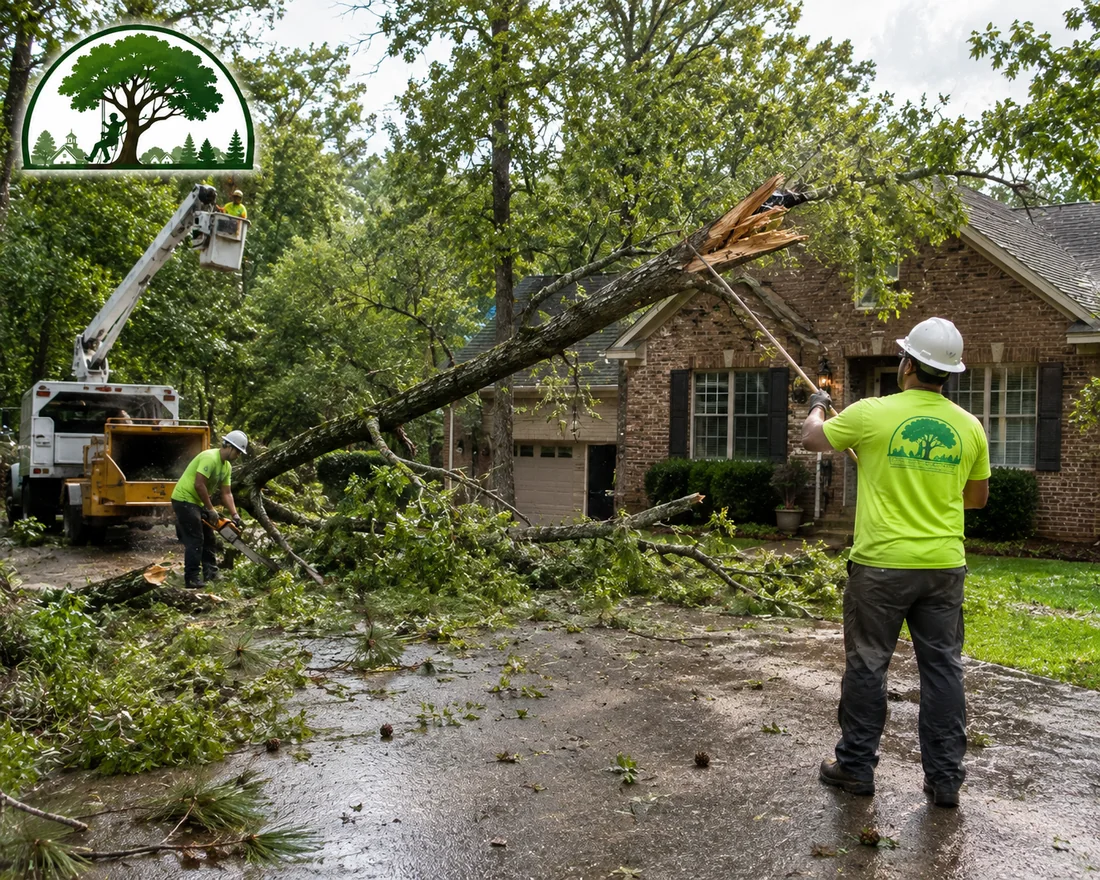
The distance between the tree and the building matters. A tree that overhangs the roof is a direct threat. Even a healthy tree can drop limbs, and a tree with any of the issues above becomes a liability. Branches that rub against the roof shingles can wear away the protective layer and cause leaks. Driveways are also at risk. Falling branches can damage a vehicle, and a toppling tree can block access for emergency vehicles. When a tree is close enough to hit the house if it falls, and it shows signs of decline, you need a plan for large tree removal.
6. Look for Weak Branch Unions
Where two or more branches grow from the same point on the trunk, the union may be weak. In many tree species, the bark grows inward at the crotch, creating a seam that never fully joins. This is called a narrow crotch or a V-shaped union. It is much weaker than a U-shaped union. A branch that splits from the trunk at a narrow angle can tear away in a storm, taking a large section of the trunk with it. Check all major limbs that hang over the roof or driveway. If the union has a visible crack or the bark looks pinched, the branch is at risk. A professional can cable or brace it, but if the tree has other problems, removal may be better.
7. Watch for Signs of Pests or Disease
Insects and diseases can weaken a tree quickly. Look for holes in the trunk or branches, sawdust-like frass at the base, or leaves that are smaller or discolored compared to other trees of the same species. Bark that sloughs off in large pieces, or a canopy that thins out, are also red flags. A tree under stress from pests may drop limbs or die back over a single season. If you see a pattern of dieback spreading from one branch to another, the tree is losing its ability to survive. Removal before it becomes a hazard is the safest course.
8. Evaluate the Ground Condition
Wet soil, especially after heavy rain, reduces root grip. A tree that stands in a low area where water collects may have roots that rot over time. On the other hand, dry, compacted soil near a driveway can also limit root growth. If the ground around the tree base is cracked, sunken, or raised compared to the surrounding area, the roots may be failing. Walk around the tree after a storm and look for fresh cracks in the soil or exposed roots. A shift in the ground level near the trunk is a strong indicator that the tree has moved and may be ready to fall.
When to Call a Professional
Many of these checks are simple to do, but they only tell you that a problem exists. Diagnosing the severity and deciding whether the tree can be saved or needs removal requires training. A certified arborist can use tools like a resistograph or a sounding hammer to measure decay inside the trunk. They can also assess the root system without digging it up. If you find two or more of the warning signs described here, especially near a roof or driveway, it is time to arrange an inspection. Do not wait for the next storm to test the tree.
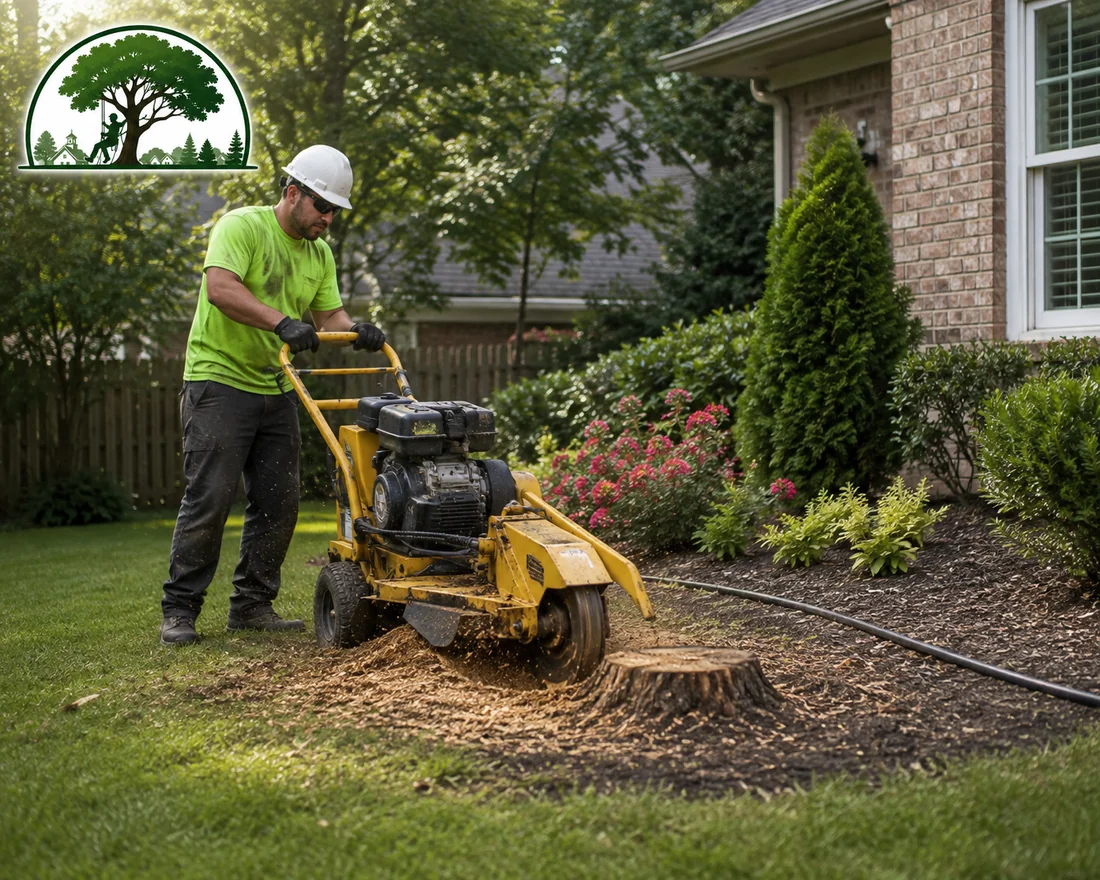
Tree work near a house or driveway is dangerous. The weight of a limb, the direction of the fall, and the proximity of structures all complicate the job. Professional crews have the equipment and experience to handle large tree removal safely. They can also handle stump grinding and debris cleanup afterward, which is not something a homeowner can do with typical tools. If you suspect a tree is hazardous, call a local tree care service that handles removals. They will give you an honest assessment and a plan that keeps your property safe.
❧